
How fast can you get a toilet out after a storm?
Speed depends on the road and the load already booked, but disaster response gets priority routing ahead of standard porta potty rental requests. West Coon Rapids sits close enough to Anoka, 5.8 miles northwest, and Andover, 6.9 miles north, that a driver already working one of those calls can often swing back within the same afternoon. A roll-off delivery truck needs about 60 feet of straight clearance behind it, so tell dispatch if a downed tree or a collapsed fence is blocking the driveway. For a single flooded basement or a home without water, a standard unit covers the gap; for a work crew doing storm cleanup, OSHA 1926.51(c) sets the ratio at one toilet for every 20 workers on site. If the disaster knocks out a septic system entirely, a holding tank rental buys time until a pump truck or a repair crew gets there. Emergency calls also route to emergency porta potty rental and to emergency septic service for tanks that need pumping before they overflow into a yard or a basement.
What happens when a septic system fails in a flood?
A failed or flooded septic system needs pumping fast, and a residential tank is typically due for service every 3 to 5 years anyway depending on tank size and household load. Flood water pushes groundwater up around the tank and can force sewage back into the house, which is when septic pumping service turns into an emergency rather than routine maintenance. A grease interceptor at a restaurant or shelter kitchen gets pumped once fats, oils and grease reach 25 percent of the liquid depth, and disaster conditions push that threshold faster than normal because generators and temporary kitchens run longer hours. Ask about septic tank cleaning or grease trap pumping if a relief kitchen or church basement is feeding cleanup crews. Watch for warning signs before the tank backs up completely; slow drains, standing water near the drain field or a sewage smell in the yard all point to a system in trouble, covered in more detail on septic tank warning signs. Handwashing matters just as much during cleanup, since debris removal, mold work and chemical treatment count as the kind of contaminant exposure OSHA 1926.51(f)(1) covers for paints, coatings, herbicides and insecticides; a handwashing station rental or portable sink rental with soap and towels satisfies 29 CFR 1910.141(d)(2), since hand sanitizer alone does not meet that standard.
What should a shelter or staging site have on hand?
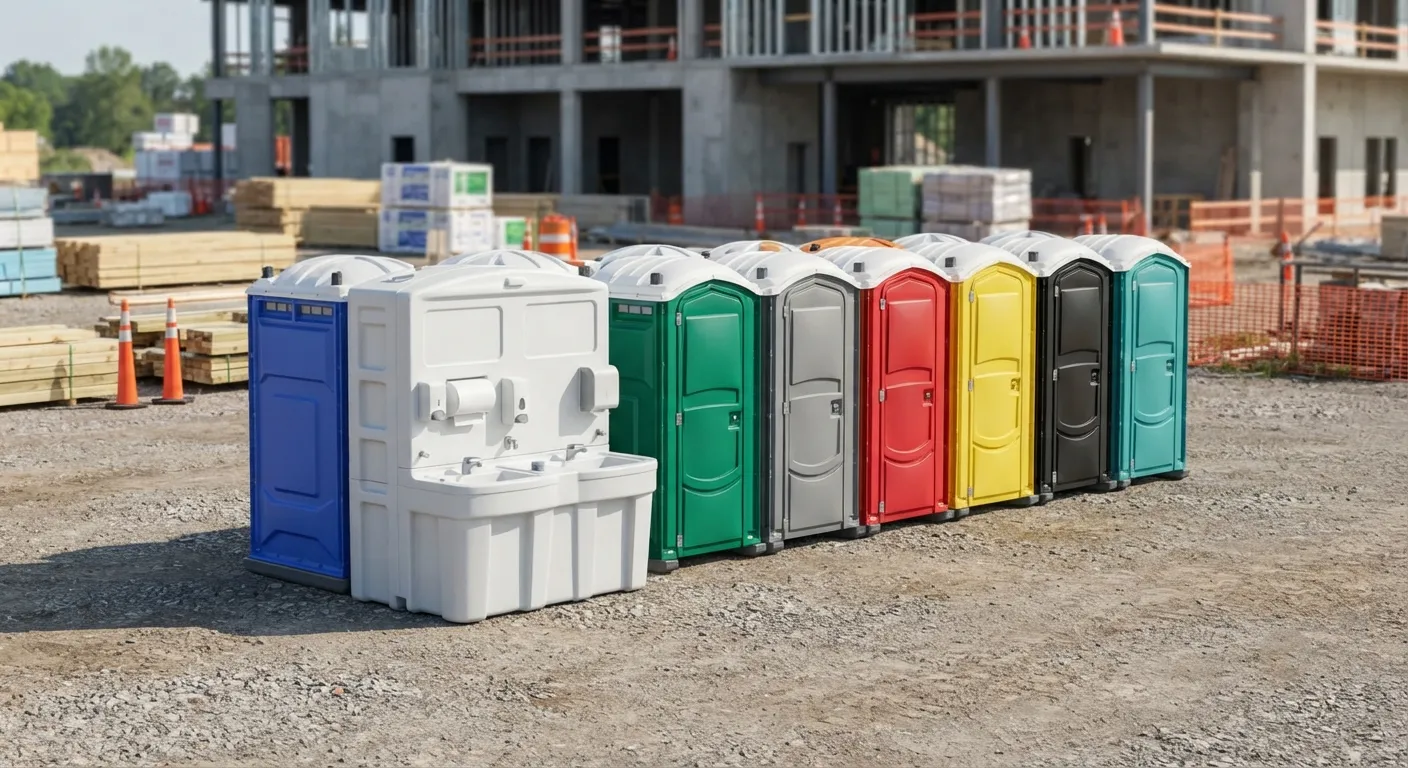
Any staging site set up after a disaster needs a working toilet count, clean water access and a way to keep debris and volunteers separated. A cluster of standard units run $200 typical for a week, which covers most short-term shelter or staging needs without booking a full month. If the site pulls in volunteers with mobility limitations, at least one unit in a cluster needs to meet ADA Standards 213.2, and that unit needs a 36 inch clear route per ADA Standards 403.5.1 and a 60 inch turning circle per ADA Standards 304.3.1; details are on ADA accessible porta potty and ADA restroom requirements. Debris piles need somewhere to go, and a roll-off dumpster rental or construction dumpster rental clears storm wreckage faster than repeated trailer trips to a transfer station. Sites handling multiple agencies or a longer recovery window sometimes add temporary fence rental to control access, plus a storage container rental for supplies and donated goods. West Coon Rapids crews have also fielded calls from Fridley, 8.6 miles south, and Ramsey, 11.6 miles northwest, when regional storms hit more than one town at once. For guidance on unit counts before disaster strikes, how many porta potties do I need walks through the math by headcount and duration.
| unit | duration | typical price |
|---|---|---|
| standard | day | $150 |
| standard | week | $200 |
| ada | day | $230 |
| septic | day | $250 |
| dumpster | week | $600 |
Do you charge more for emergency same-day delivery?
Same-day and after-hours delivery does carry a delivery fee, typically $150 for a single day dispatch, on top of the unit rate. That's standard across the industry for rush service, not a disaster markup specific to West Coon Rapids.
Can you service a site with no running water at all?
Yes. Standard portable toilets don't need a water hookup to function, which is exactly why they work for flood zones and power outages. A holding tank rental covers greywater needs if the site also lost its water supply.
How often will the units get serviced during a long cleanup?
The baseline under ANSI/PSAI Z4.3 is one service visit per week for up to 10 users over a 40 hour week. Disaster sites with heavier use, like shelters or staging areas, usually need more frequent pumping than that baseline.
What if the septic tank overflowed into the yard?
That needs a pump-out call right away, not a scheduled appointment. Contamination from an overflowed tank is a health hazard, and OSHA 1926.51(a)(1) requires potable water on any active worksite, which an overflow can compromise fast.
Do you deliver to towns near West Coon Rapids during regional disasters?
Yes. Crews already routing through Anoka, Andover, Fridley, Brooklyn Center and Ramsey can extend to multi-town disaster response without a separate dispatch, since those towns sit within roughly 6 to 12 miles of West Coon Rapids.
Next step
Get a delivery date
Tell us the address, the dates and the headcount. We size the order and confirm the route.